
April 30 in Quang Tri: How to Experience Vietnam’s Reunification Festival Like a Local
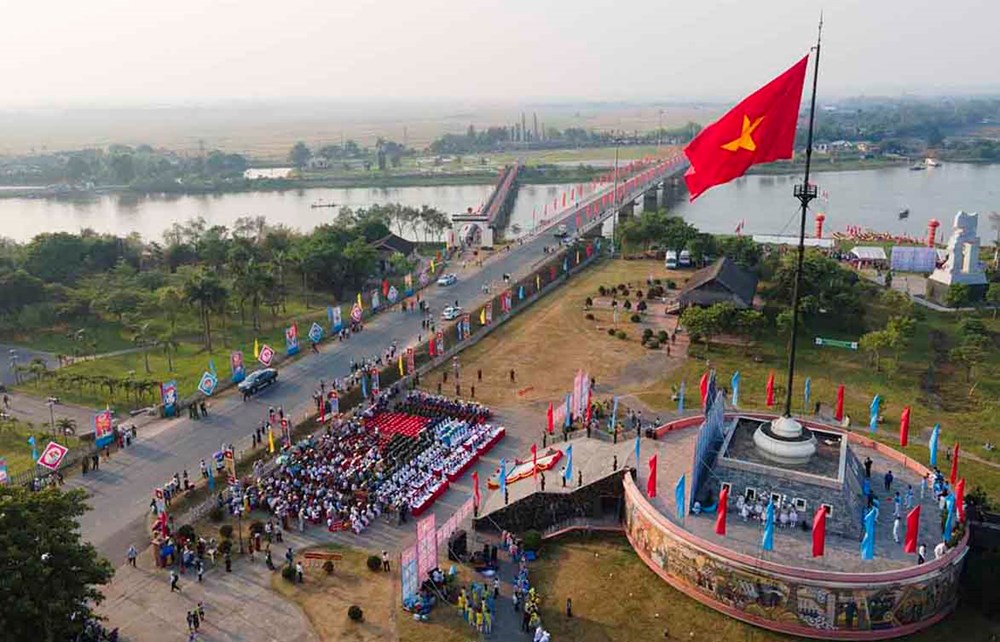
Experiencing April 30 in Quang Tri provides a profound alternative to typical holiday crowds. The banks of the Ben Hai River reveal a living history of resilience rather than a standard tourist attraction. Localis invites you to read through this guide to understand the authentic pace of the National Reunification Festival and discover how to connect deeply with this remarkable region.
1. Why April 30 at Ben Hai River Feels Different?
April comes with a heavy humid heat in Quang Tri. Standing on the banks of the Ben Hai River on the final day of the month brings an atmosphere completely detached from the typical holiday rush found along the coast. You are standing at the exact geographical coordinate that once split a nation.
1.1. The Physical Reality of Hien Luong Bridge
The Geneva Accords of 1954 ended the First Indochina War and temporarily divided Vietnam along the 17th parallel, with the Ben Hai River as the physical boundary. Hien Luong Bridge, spanning just 178 meters across that river, became the line between two worlds.
Families were separated overnight. People on the north bank could see those on the south but could not cross. For over two decades, the bridge was painted in two colors: the northern half in red, the southern half in blue, a visual split that said more than any map could.
When the country reunified in 1975, the bridge did not disappear. It was rebuilt, preserved, and turned into a national symbol. The flagpole on the north bank, which once stood at 38.6 meters and flew the largest flag in Vietnam as an act of defiance visible across the river, still stands today as the centerpiece of the annual commemoration.
What makes this place different from a typical war memorial is that it does not feel like a museum. It feels like a wound that healed and left a scar worth seeing.
1.2. What the Festival Looks Like Today
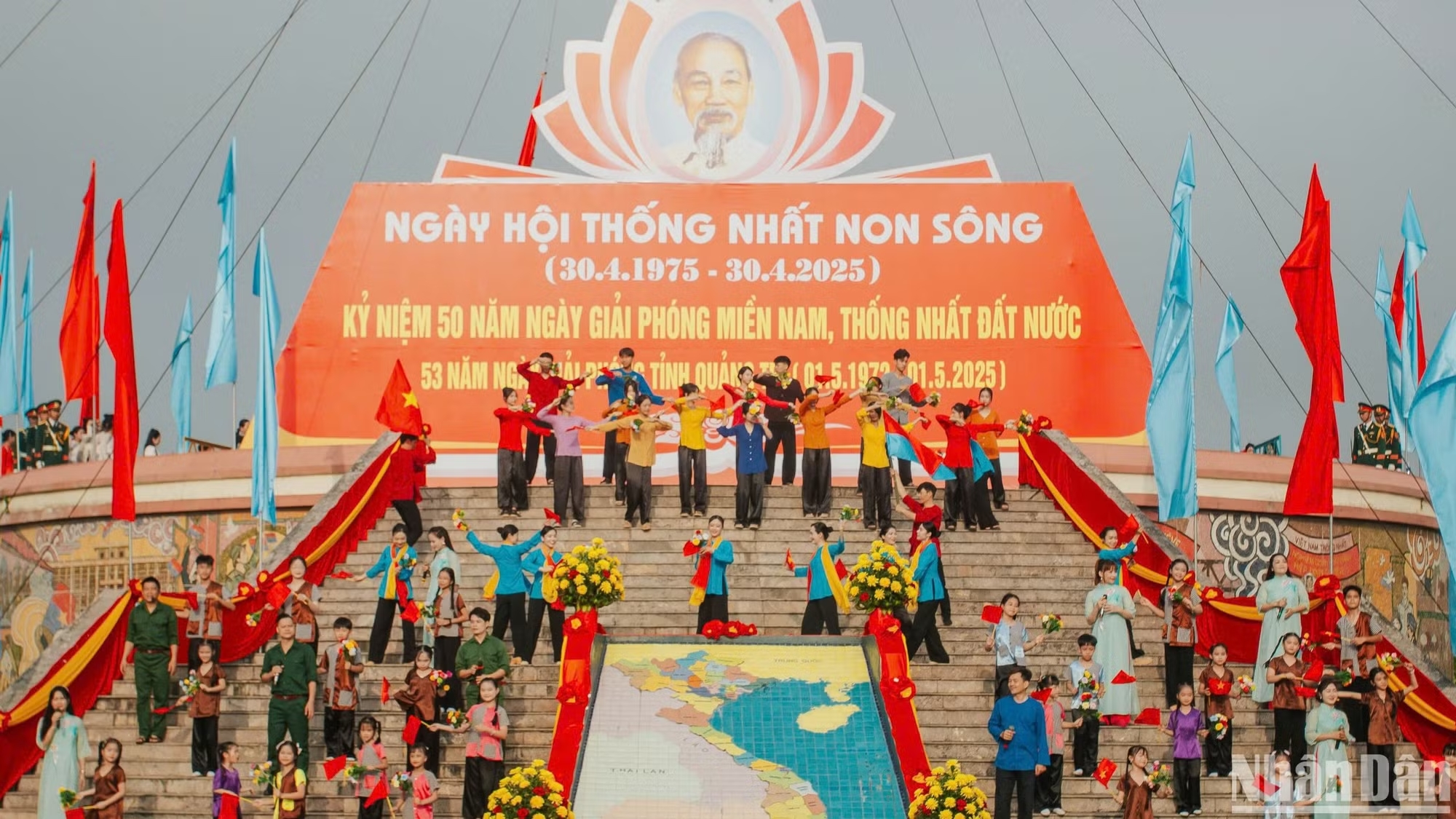
The National Reunification Festival, held every April 30 at the Hien Luong Bridge relic site, is one of the most emotionally charged public events in north central coast Vietnam. It draws a crowd that is overwhelmingly local: veterans, schoolchildren in uniform, families from Quang Tri and neighboring provinces, and a small number of visitors who found their way here by curiosity or intention.
The atmosphere in the early morning hours before the ceremony is unlike anything you will find at a resort on the same holiday. People gather quietly along the riverbank. Incense is lit at small memorial spots along the path. By the time the official program begins, the crowd has swelled into the thousands, standing shoulder to shoulder under the flag that once meant everything to the people of this province.
Read more: National Reunification Festival in Quang Tri
2. Following the Local Pace on Memorial Day
Knowing what happens and when is the difference between arriving prepared and missing the most important moments entirely. The program follows a consistent format each year, anchored around the flag ceremony in the early morning and cultural activities through the rest of the day.
2.1. Flag-Raising Ceremony
The flag-raising ceremony, known locally as Lễ Thượng Cờ, begins at 6:00 AM. This is non-negotiable if you want to witness the emotional core of the entire festival. A military honor guard conducts the raising of the Vietnamese flag at the historic flagpole on the north bank, accompanied by the national anthem played live. The crowd stands in silence. It is not performative. It is the kind of moment that reminds you why you traveled here instead of somewhere easier.
When I bring travelers out here, the first thing I remind them is to leave their holiday mindset behind. We are attending a memorial and the veterans standing next to us appreciate visitors who dress with that gravity in mind. Light and breathable fabrics that cover your shoulders and knees are the only way to go, especially since that concrete square turns into an oven by mid morning.
Forget about finding a comfortable cafe near the bridge. Our usual routine is grabbing a banana leaf packet of sticky rice from a street cart and eating it right on the motorbike saddle before the crowds thicken. I highly recommend starting your ride from Dong Ha city, which is a straight 22 kilometer run down Highway 1A. You can pick up a rental bike in town for an estimated 120,000 to 150,000 VND per day.
Keep in mind that local rental owners might adjust these market prices slightly during the peak holiday week, so secure your ride the evening before to save yourself a lot of morning hassle.
(Photo: Van hoa newspaper)
2.2. Cultural Performances and Parade
Following the flag ceremony, the program moves into a series of cultural performances along the riverbank and the surrounding relic zone. Traditional music from Quang Tri and neighboring provinces, folk dances, and theatrical performances referencing the wartime period are staged on an open-air platform near the bridge. Local schools and community groups participate in a procession through the historic zone, with students dressed in traditional ao dai and veterans wearing their medals.
The performances typically run from mid-morning to early afternoon. The parade route passes through the main memorial area and loops back toward the Ben Hai River embankment, making it easy to find a good vantage point along the path. The energy shifts from solemn to celebratory as the morning progresses, which reflects exactly how April 30 feels to most Vietnamese people: grief and gratitude held in the same moment.
2.3. Practical Tips for the Day
The festival site sits about 22 kilometers south of Dong Ha city, the main urban center of Quang Tri Province. Renting a motorbike from Dong Ha is the most flexible option, with rental rates typically running between 100,000 and 150,000 VND per day. Taxis and ride-hailing apps also operate in the area but become harder to book once the crowds peak.
Dress respectfully. This is a national commemoration, not a street festival. Light, modest clothing in neutral colors is appropriate. Avoid shorts and sleeveless tops, particularly during the morning ceremony.
The relic site itself is free to enter. Food vendors and small stalls operate along the approach road from early morning. There are no large restaurants on-site, so eating in Dong Ha before heading out or packing food is a practical choice.
3. 2-Day Heritage Itinerary in Quang Tri
Most visitors make the mistake of treating Hien Luong as a single stop. What they miss is an entire province that holds more wartime history per square kilometer than almost anywhere else in Southeast Asia.
3.1. Day One From the Bridge to Vinh Moc
Start the morning at the festival ceremony. After the flag-raising, head northeast toward Vinh Moc, about 13 kilometers from the bridge. The Vinh Moc Tunnels were not built for guerrilla warfare. They were built for survival. Between 1966 and 1972, the entire village relocated underground to escape bombing campaigns. The system runs three levels deep, reaching 23 meters below ground, and housed over 60 families for six years. Seventeen children were born inside during that period.
What to know before you go:
- Entry fee is approximately 40,000 VND for adults.
- Guided tours run in Vietnamese and English.
- Budget 90 minutes minimum.
- Local guides are descendants of the original villagers, which makes their accounts unlike anything you will read in a travel guide.
In the late afternoon, return to the Ben Hai River embankment. As the festival crowds thin out, the riverbank becomes quiet. Watching the sun drop behind the tree line on the opposite bank, in a place that was once the most heavily bombed stretch of land on earth, is the kind of moment that does not translate into a photograph.
3.2. Day Two The Citadel and Truong Son Cemetery
Morning: Drive south to Quang Tri city, about 15 kilometers from Dong Ha. The Ancient Citadel was the site of an 81-day battle in 1972 in which over 3,000 soldiers died within its walls. The scale of destruction is still visible in the remaining structure. A small on-site museum documents the siege in detail. Entry is free. Allow one hour.
Midday: Drive northwest to Truong Son National Cemetery, roughly 38 kilometers from the citadel. This is the largest national military cemetery in Vietnam, holding over 10,000 graves of soldiers who died along the Ho Chi Minh Trail. Many headstones read only “Liet Si Vo Danh,” meaning Unknown Martyr. Most were in their twenties.
Departure: From Truong Son, continue north to Dong Hoi for a flight or train, or head south to Hue in under two hours by road.
4. The Local Side of Quang Tri Nobody Talks About
The food in Quang Tri is deeply rustic and grounded in the daily routines of its people. Between visiting the massive historical sites and attending the commemorative ceremonies, you will find quiet and unhurried moments that belong entirely to the locals. By five in the morning on April 30, the streets surrounding the Dong Ha central market are already fully awake and active.
Pull up a plastic stool at any open-front kitchen and order a bowl of bun bo. The local version is deeper and less sweet than the Hue style, with lemongrass and shrimp paste doing most of the work. You will likely sit beside a grandmother in her festival clothes or a veteran who has made this same trip every April 30 for decades.
After the morning ceremony, find a plastic chair on the bank of the Thach Han River and order a ca phe sua da. Watch fishermen push off from the bank. Let the city move around you without joining it. On the evening of April 30, the same riverbank fills with locals releasing paper lanterns onto the water in memory of soldiers who died in the 1972 citadel battle. Joining this, even as a quiet observer, reframes everything you saw earlier in the day.
A few other moments worth building into your time here:
- Wander through Dong Ha market in the early morning before heading to Hien Luong.
- Stop at a banh mi cart near the citadel for lunch, where the filling changes based on whatever the vendor had access to that morning.
- Return to Hien Luong Bridge between 4:30 and 5:30 PM when the crowds have thinned, walk the full length at your own pace, and stay long enough to watch the light change over the Ben Hai River.
5. Getting to Quang Tri from Major Hubs
Quang Tri has no commercial airport. Most visitors arrive by road or rail and use Dong Ha city as their base. Book all transport at least two to three weeks ahead for the April 30 holiday period.
5.1. Traveling Down from Hanoi
Overnight train to Dong Ha: 10 to 12 hours, soft sleeper tickets from 400,000 to 650,000 VND. Fly into Dong Hoi Airport in Quang Binh, then 90 kilometers south to Dong Ha by bus or taxi.
5.2. Moving North from Ho Chi Minh City
Fly into Phu Bai Airport in Hue, approximately 1 hour 20 minutes, then 70 kilometers north to Dong Ha by taxi or limousine bus. Fly into Dong Hoi for a north-to-south route through the relic sites. Direct train from Saigon to Dong Ha runs 17 to 19 hours with sleeper berths available.
5.3. The Short Route from Da Nang
Limousine bus from Da Nang to Dong Ha: 2.5 to 3 hours, tickets from 120,000 to 180,000 VND. Train from Da Nang to Dong Ha: approximately 2 hours, from 80,000 to 150,000 VND depending on class. Da Nang is the easiest entry point. Quang Tri is viable as a day trip from here, though an overnight stay allows for a far more meaningful experience.
6. Experience It Like a Local with Localis
Visiting Hien Luong Bridge on April 30 is something you can do on your own. But understanding what you are seeing, and why it matters to the people standing next to you, is a different kind of experience entirely. Localis connects travelers with local guides who grew up with these stories. Some have family histories tied directly to the Ben Hai River, the tunnel villages, and the citadel siege. A guided experience through Localis does not add a layer of performance to your trip. It removes the distance between you and the place. If you are finalizing your April 30 Vietnam travel plans and want to go deeper than the standard holiday crowd, this is where to start. Travel like someone who lives here.