
The 12 Relief Sculptures of Ben Thanh Market: The Story of Southern Produce Through 4 Portals
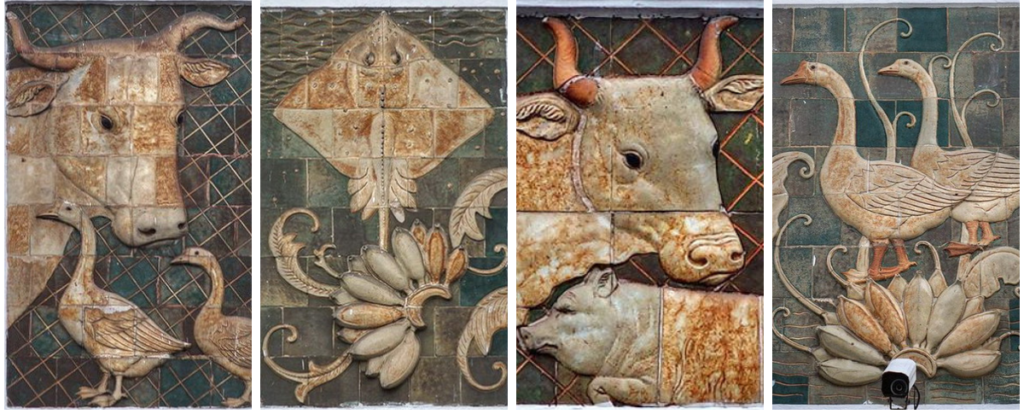
How many times have you visited the city’s iconic market? Surely, countless times. We often rush through the bustling crowds to find a delicious dish or shop for a few souvenirs. But before stepping through those busy gates, have you ever paused for a few seconds and looked up?
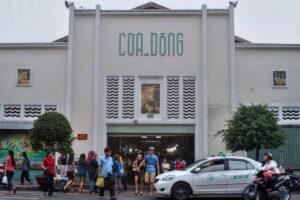
Right above the main arched doorways, an “art museum” silently resides. The collection of relief sculptures at Ben Thanh Market is not merely an architectural touch, but a vivid ceramic memoir, chronicling the bounty of the Southern land over the past seven decades.
1. The 1952 Convergence: When Ben Thanh Market’s Architecture Adorned Bien Hoa Ceramics
The history of these relief sculptures dates back to the grand renovation of the market in 1952. Realizing that the architecture of Ben Thanh Market required highlights that captured the true soul of the South, the construction contractor at the time decided to commission the Bien Hoa School of Practical Arts.
This special task was entrusted to the talented sculptor Le Van Mau (1917–2003). From lifeless blocks of clay, the artisan’s hands molded the shapes of familiar produce from the Mekong Delta. Collaborating with outstanding ceramic artisans such as Sau Sanh and Tu Ngo, this artistic masterpiece was born, contributing a brilliant chapter to the cultural heritage repository of Ho Chi Minh City.
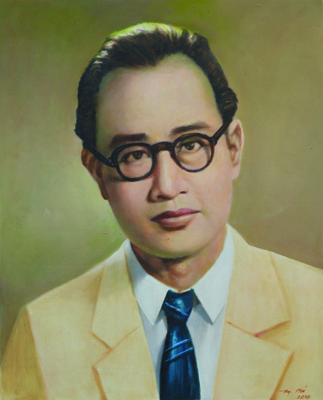
1.1. The Secret of Segmented Firing and One-of-a-Kind Flambé Glaze Colors
To prevent the large-scale ceramic murals from cracking or warping under high-temperature firing, the artisans segmented the artwork into multiple smaller, separate pieces. Each piece of ceramic was carefully dipped in glaze before being placed into traditional wood-fired kilns.
It was the raw, rustic flames and uneven temperatures within these wood kilns that triggered a magical hỏa biến (flambé/reactive glaze) phenomenon for these Southern produce depictions. Upon exiting the kiln, the glaze colors naturally shifted from ivory white to an exceedingly rare “fatty chicken yellow” (vàng mỡ gà) hue. The meticulous assembly process, spanning two months by the artisan group of Ba Nga and Tu Dang, transformed each mural above the arches into an everlasting, unique masterpiece.
2. The Meaning of Ben Thanh Market’s Reliefs Across 4 Directional Gates
Far beyond mere decoration, the 12 Bien Hoa ceramic murals are strategically arranged across the East, West, South, and North gates, reflecting a profound economic and humanistic philosophy. They serve as a proud affirmation of a trading hub—a crossroads gathering the finest produce of the Southern land.
2.1. The South and West Gates: Echoes of a Riverine Civilization
-
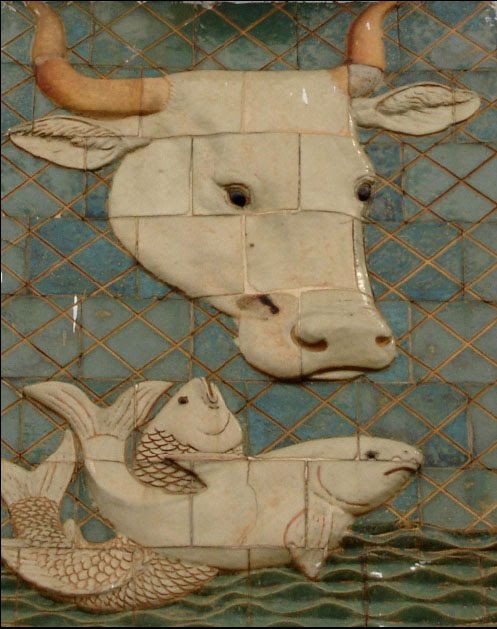
Relief sculpture at the South Gate.
(photo: internet)The South Gate (The main clock tower entrance): This gate faces the Saigon River, where boats from the Mekong Delta once continuously docked in the old days. The vaulted ceiling here is adorned with a central relief cluster of Cow – Fish, paired with a Ray and a Catfish on the left flank. The imagery of the freshwater catfish and the brackish-water ray provides a vivid slice of life honoring the riverine and orchard civilization.
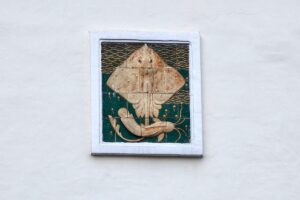
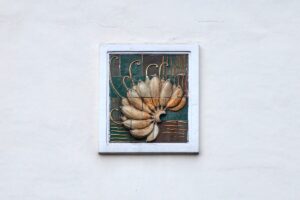
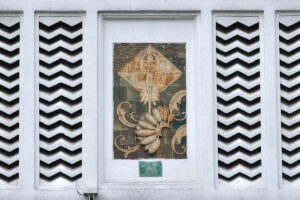
- The West Gate (Facing Phan Chu Trinh Street): Moving around to the West Gate, the narrative of rivers and waterways is extended with symbols of a ray and a plump bunch of bananas. The bunch of bananas—a humble yet fruitful orchard fruit—embodies the pioneers’ aspiration for a sweet, prosperous, and abundant life in a new land.
2.2. The East and North Gates: Aspirations for Orchard Abundance
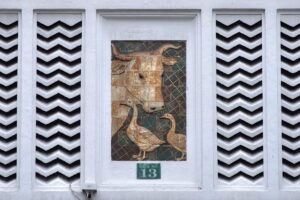
(Photo: Internet)
- The East Gate (Facing Phan Boi Chau Street): While the two river-facing gates overflow with aquatic life, the East Gate tells the story of terrestrial agriculture. The central gate stands out with a relief of a cow and a duck, flanked by lively ceramic carvings of pigs. This direction welcomed the flow of trade pouring from the rich farming regions and fertile plains of the East into the heart of Saigon.
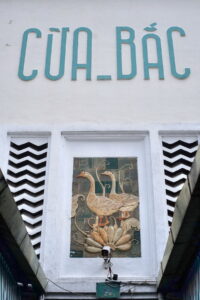
(Photo: Internet)
- The North Gate (Facing Le Thánh Ton Street): Finally, at the North Gate, the motif of the duck and the bunch of bananas is subtly repeated. Even though parts of it are partially obscured by modern architectural structures today, a careful look will reveal the wings of Bien Hoa ceramic ducks spread wide, acting as a warm welcome to visitors entering the largest agricultural hub of the metropolis.
3. Seeking Pieces of Heritage Amidst Urban Rhythm
Exploring Ben Thanh Market is far more than a typical shopping trip; it is a journey into multi-layered cultural sediments. The intersection of Western architectural philosophy and indigenous Southern ceramic craftsmanship transforms this market into an ideal destination for those who love exploring urban depth. After admiring the ancient reliefs, visitors can treat themselves to a refreshing glass of sweet soup (chè) right in the heart of the market to conclude an inspiring Art Tour.
(Photo: Internet)
Enduring over 70 years of weathering the elements, the colors of Bien Hoa ceramics remain pristine, silently embracing the frantic pace of urban life. Ben Thanh Market is truly a living heritage that fully preserves the soul and aspirations of the Southern land.
This weekend, try stepping out onto the streets, strolling around the four arched gateways, and looking up at these masterpieces of time. Come to see the fine lines of the ceramics with your own eyes, and discover just how deep and alluring Saigon can be!