Description
1. About the Bay Nui Ox Racing Festival
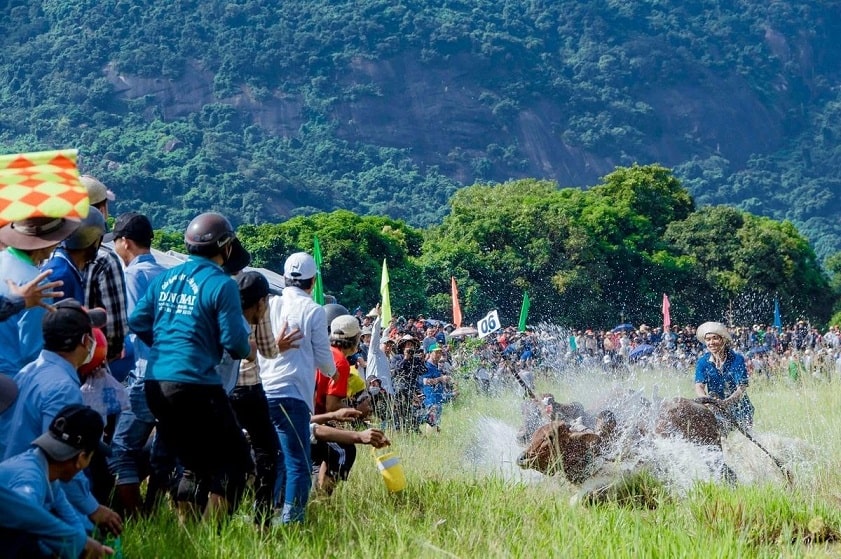
Held annually during the Sene Dolta festival — the Khmer ancestor worship ceremony — the Bay Nui Ox Racing Festival is one of the most distinctive traditional events of the Khmer people in An Giang province and the broader Mekong Southwest region. It takes place in the middle of the wet season, when floodwaters from the Mekong push inland and drench the lowland rice fields of the That Son (Seven Mountains) area — and it is precisely this flooded terrain that makes the race what it is.
No one knows exactly when the first race was held. According to local elders, it began as a communal custom: Khmer farmers would send their oxen to plow the temple fields during the agricultural season, and once the plowing was done, the animals would naturally be paired off and raced across the same wet ground. Over time, Khmer monks began organizing the races more formally on temple fields, with the prestigious prize for the winning pair being a ceremonial bell.
In 2004, the People's Committee of An Giang province elevated it to a provincial-level traditional cultural festival, expanding participation to multiple districts. In January 2016, the Ministry of Culture, Sports and Tourism officially recognized the Bay Nui Ox Racing Festival as a National Intangible Cultural Heritage.
Today, the festival has run for over 30 editions. The 31st Bay Nui Ox Racing Festival for the An Giang Television Cup is scheduled to be held in An Cu Commune in 2026.
2. Key Activities
The mechanics of this race are unlike anything else in Vietnam, testing both the skill and endurance of the oxen and their riders.
Traditional Rituals: Before the race begins, the atmosphere is filled with spirituality. Monks preside over blessings, and the spirit of Sene Dolta runs through everything—showing deep reverence for ancestors and immense pride in a living tradition.
Festivities:
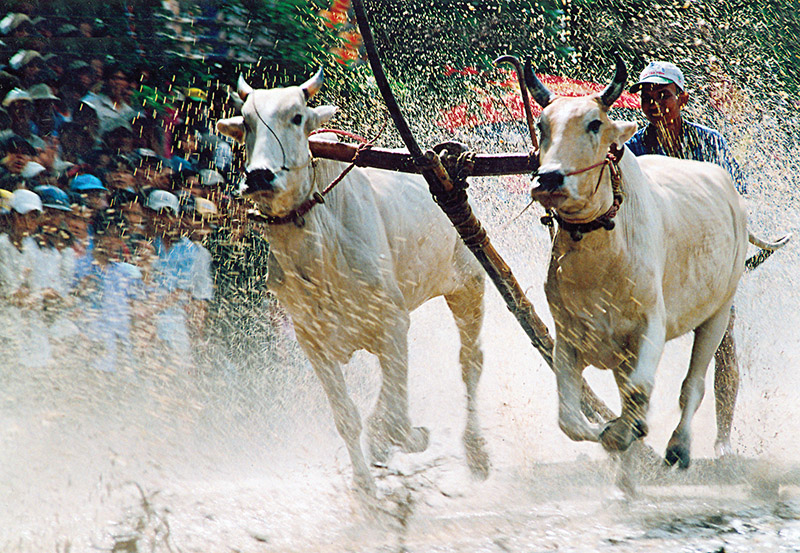
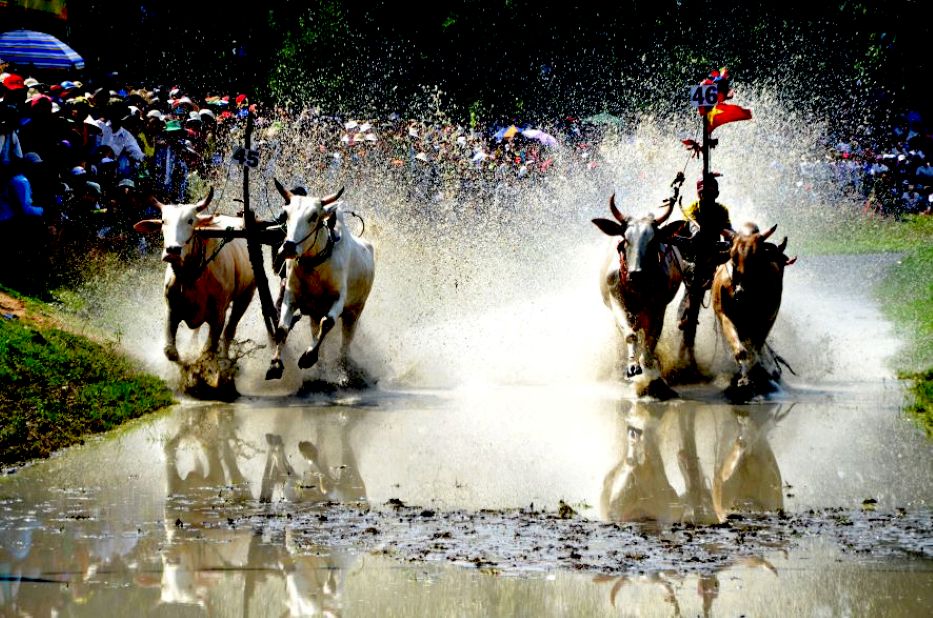
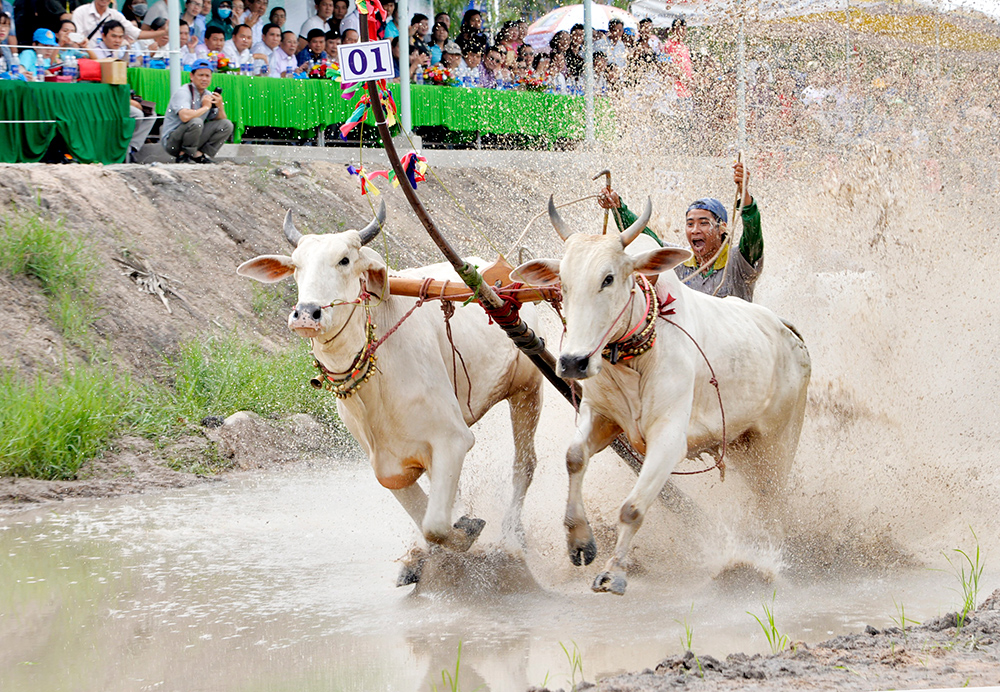
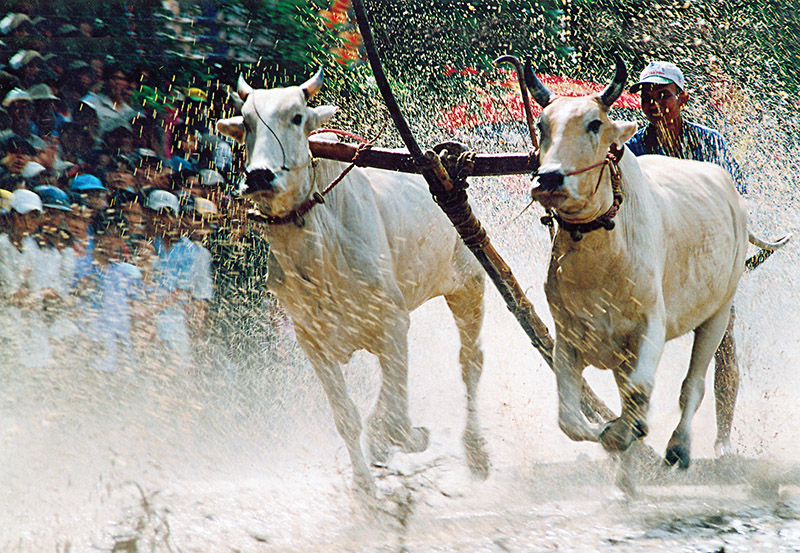
- "Surfing" on the mud: Oxen are paired in teams to pull a longboard across a flooded track. The "jockey" must balance on top and "surf" the board while guiding the animals through a course dredged roughly 10 centimeters deep and covered in 5 to 10 centimeters of water.
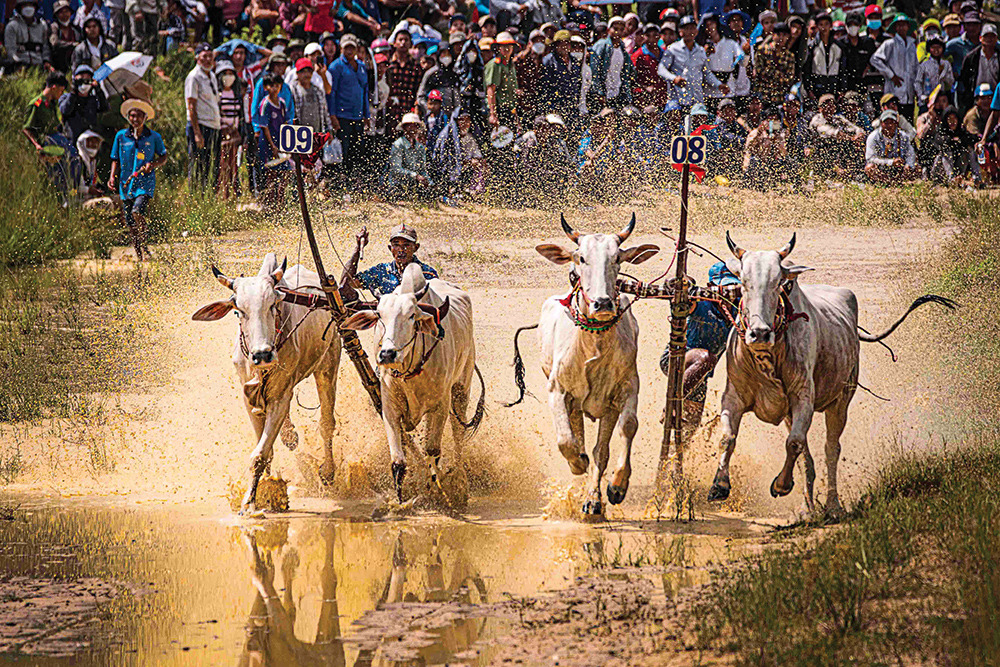
(Photo: Collected)
- Knockout Format: The races follow an intense knockout format. This year's edition, for instance, brings together 64 outstanding ox pairs from 10 communes and wards (including Tri Ton, Ba Chuc, O Lam, and Tinh Bien). Hundreds of cheering spectators, traditional dances, drums, and flags create a contagious, explosive energy that is easy to get lost in.
3. Tips
- Ideal Timing: The festival typically falls in late September to early October (around the 9th–10th of the 8th lunar month). Arrive early on race day! The best viewing spots near the track fill up fast, and the pre-race atmosphere—with ox owners making final preparations and monks offering blessings—is just as captivating as the race itself.
- Location: The exact hosting commune rotates each year (2026 is expected to be in An Cu Commune). The Ta Pa - Soai Chek Sports and Tourism Complex in Tri Ton district is frequently used as a main venue.
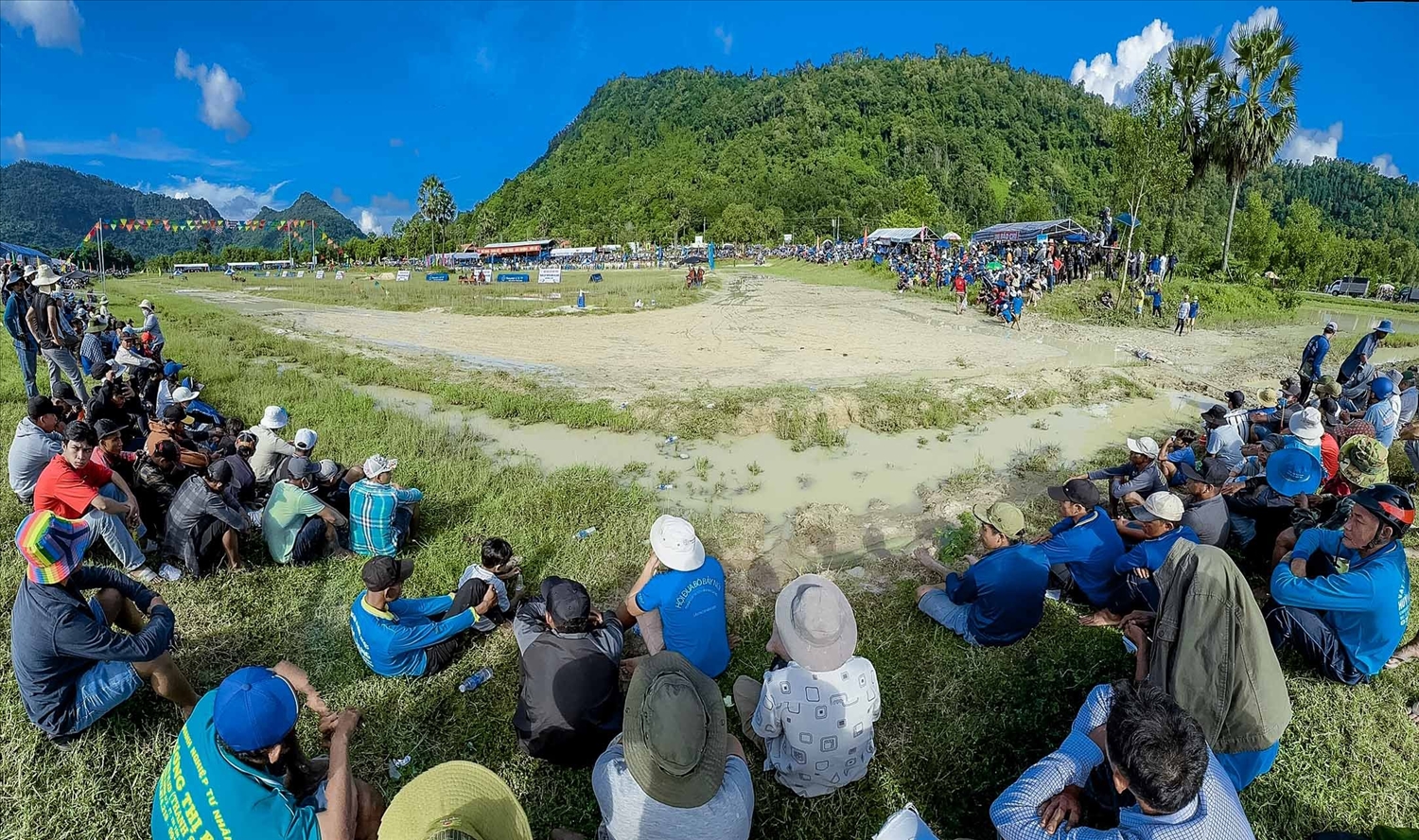
(Photo: Collected)
- What to Wear: Bring a change of clothes if you plan to get close to the action. With oxen sprinting at full speed, the mud will definitely fly!
Local Recommendations: The Bay Nui (Seven Mountains) area is worth more than a single day. Consider staying at a local homestay to truly put yourself inside the Khmer community during one of their most meaningful calendar events. From there, you can easily explore Cam Mountain (710 meters, offering panoramic views over the That Son range and rice fields stretching to the Cambodian border) or take a boat through the Tra Su cajuput forest, one of the most atmospheric wetland landscapes in the Mekong Delta.
(Photo: Collected)
Location
-
Tri Tôn, An Giang, Vietnam